
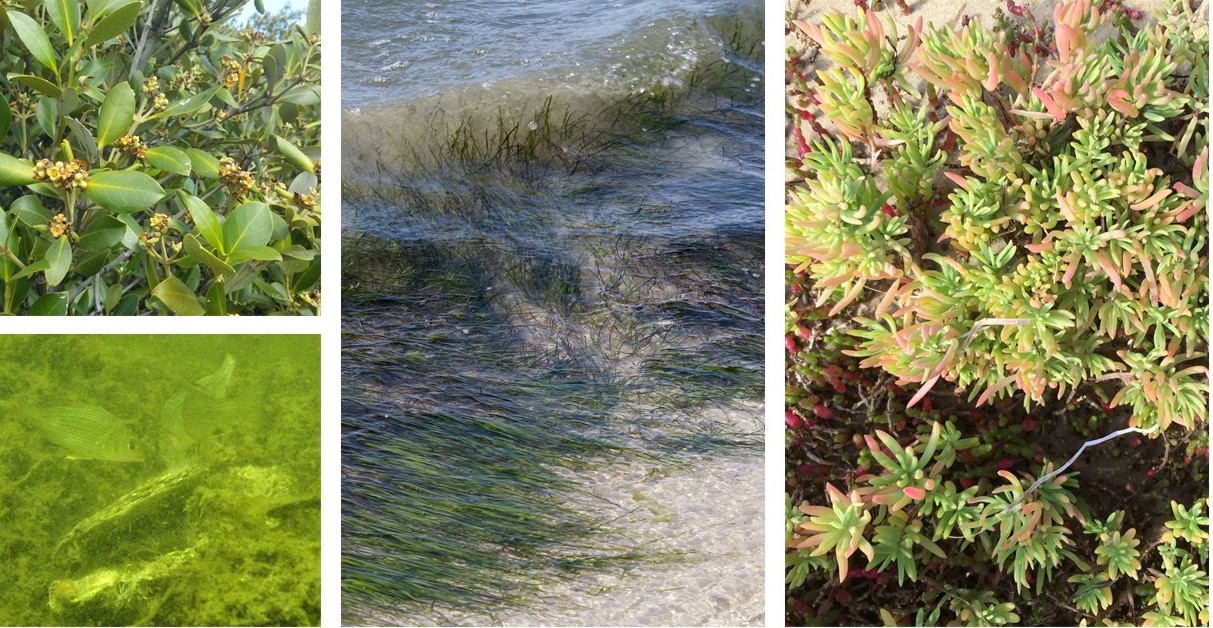
The Friends of Port River has made a submission to the Joint Committee on Harmful Algal Blooms in South Australia advocating greater protection, conservation and restoration of the natural environment of the Port River and Barker Inlet Estuary, in response to the HAB.
This blog outlines the impacts of HAB on the Estuary to the end September 2025.
Restoration in the Port River
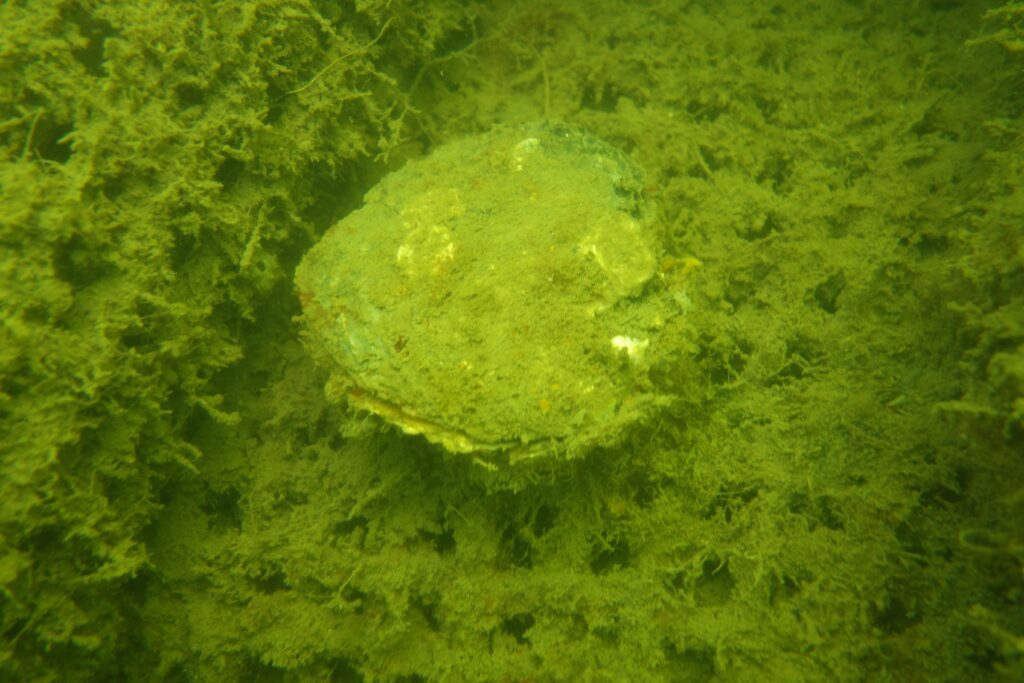
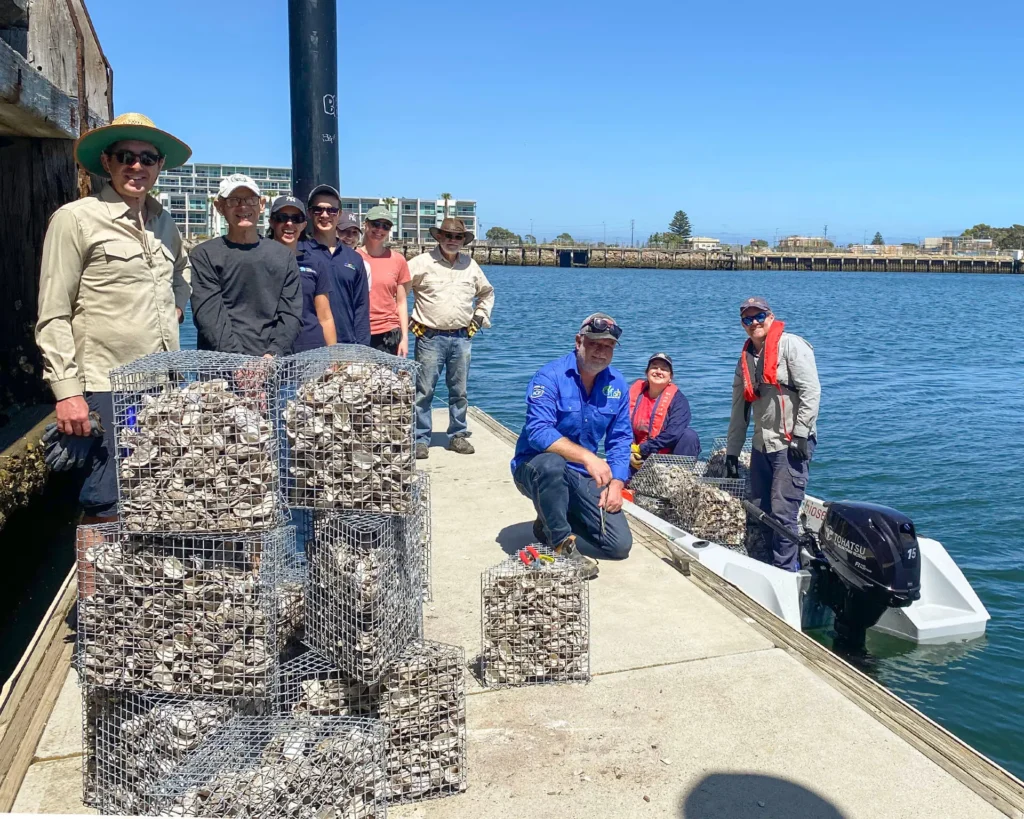
From 2016 to 2023 the Estuary Care Foundation (Friends of Port River’s predecessor) pioneered community-led shellfish reef restoration, seagrass monitoring and restoration and Living Shorelines projects in the Port River.
Successful trials by ECF confirmed that the native oysters could be restored to the River, with multi-species reefs, and that mangrove seedlings could be successfully transplanted (by NewPort Quays) to form Living Shorelines. In the 2022 Federal election significant funding commitments, under the Urban Catchments and Waterways program, made possible major extensions of restoration projects with OzFish creating reefs using Robust Oyster Baskets and the City of Port Adelaide Enfield implementing a Living Shoreline at Yitpi Yartapuultiku.
The Living Shoreline at Yitpi Yartapuultiku is trialling the transplanting of mangrove seedlings and of coastal plants including pigface and samphires.
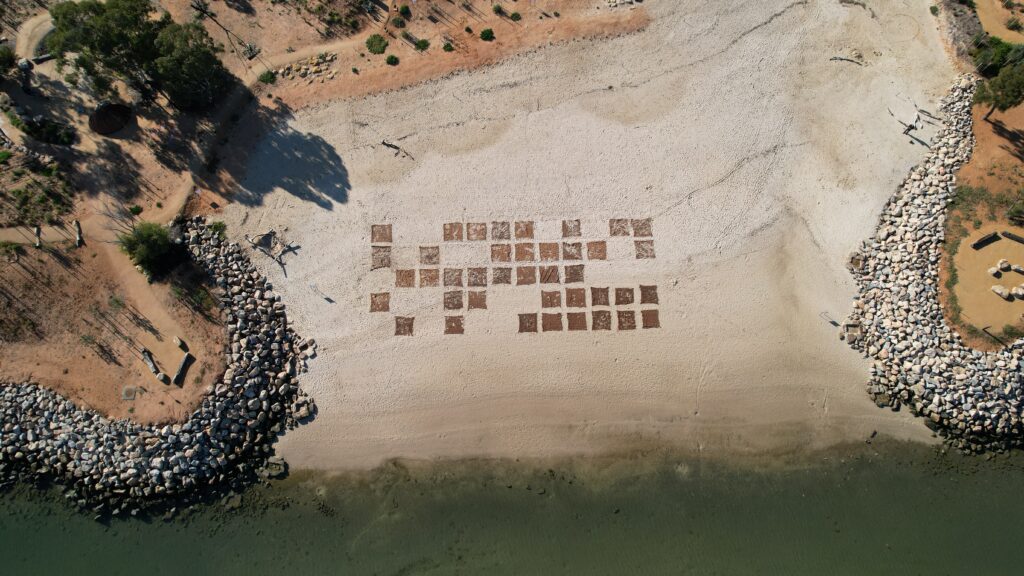
New plant life has been observed this week (week of October 6th) on the bags treated under option 3.
While small scale trials of seagrass in the Estuary have encountered problems, including heatwaves, further trials are warranted given the significant benefits provided by seagrass including sediment stabilisation, carbon and nutrient trapping.
As advised by Dominic McAfee and Sean Connell (University of Adelaide) as to how to clean up the algal bloom
“..algicidal bacteria are found in abundance on common seagrasses around the world, providing healthy seagrass meadows with natural immunity. Conserving and restoring seagrass offers one way to tackle the problem longer term”.
The SA’s Government’s Blue Carbon Strategy can provide some protection for our mangroves, seagrass and saltmarsh if there was Government commitment to implement the strategies being developed e.g. for the St Kilda saltfields and the Gillman wetlands, through Green Adelaide Blue Carbon Futures grants.
Recommendations to the Joint Committee
FPR recommends that State and Federal funds be committed to conservation and restoration in the Port River and Barker Inlet Estuary, and beyond of course. Some of the priority projects locally include
- Greater protection of the Estuary environment, as envisaged by ADS Act, the State Government’s Blue Carbon Strategy and the Biodiversity Act and consistent with the State Government’s 2022 declaration of a climate emergency
- Extension of shellfish reef restoration in the Estuary
- Implementation of blue carbon solutions in the Estuary including in significant areas of the St Kilda saltfields and Gillman, as outlined in research being funded by the Green Adelaide Blue Carbon Futures grants
- Further trialling of restoration techniques for mangroves, saltmarsh and seagrass
- Safeguarding, from development, the Magazine Creek wetlands, the Range Basin and the Magazine Basin and the remaining Threatened Ecological community (TEC) Subtropical and Temperate Coastal Saltmarsh.
Read the FPR’s submission to the Joint Committee here.