
The first official report of the Harmful Algal Bloom in the Port River came from the Department of Environment and Water on 8th July 2025, advising that
Testing undertaken last week has confirmed elevated levels of the Karenia species along the metropolitan coastline, and very high levels at the Garden Island and Outer Harbor boat ramps.
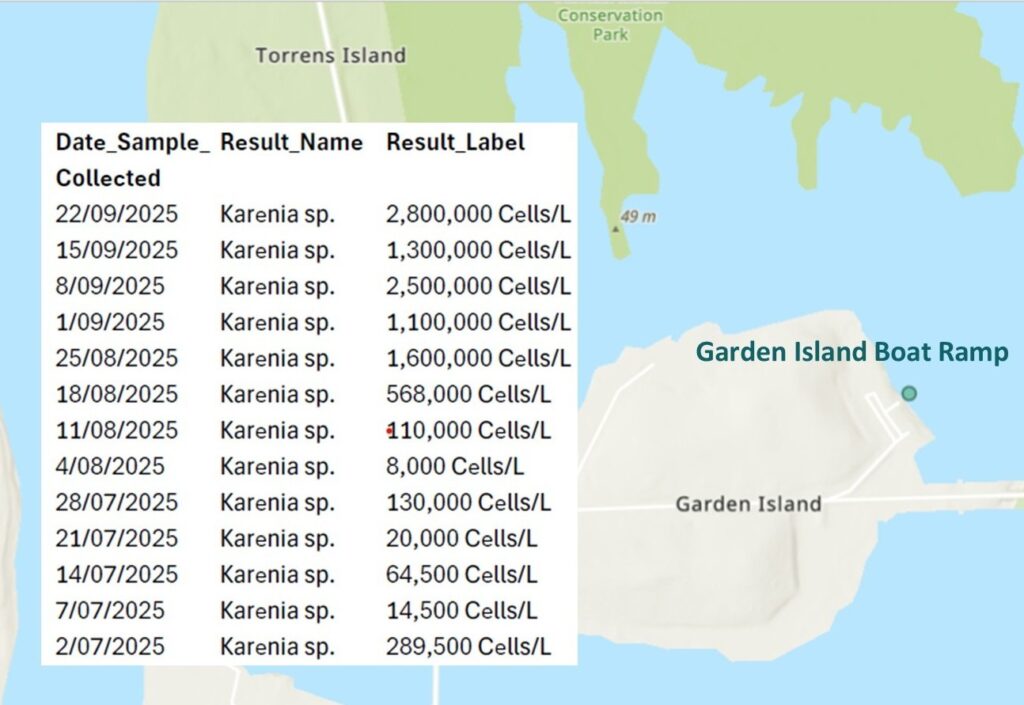
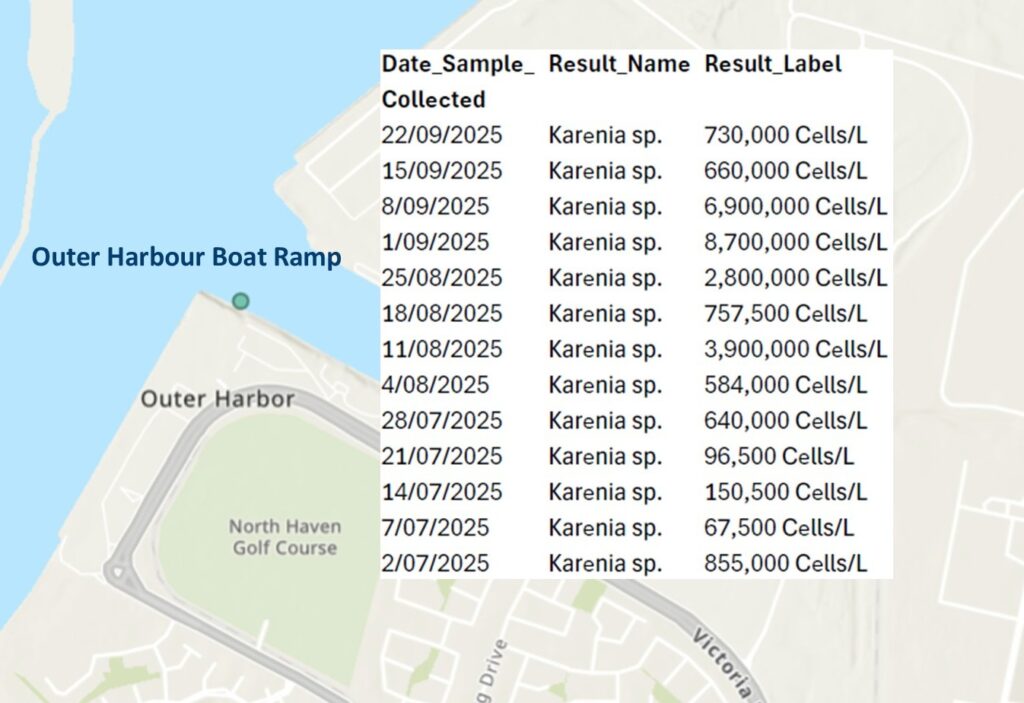
The levels detected on July 2nd were 289,500 cells/litre of Karenia species at Garden Island and 855,000 cells/litre at Outer Harbor.
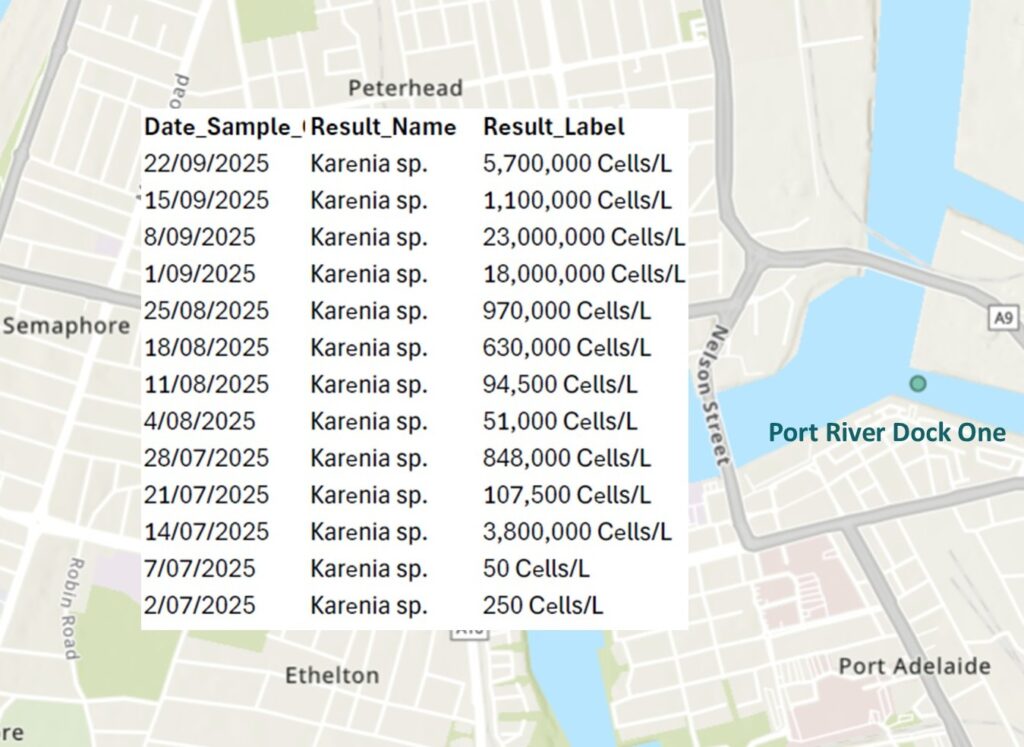
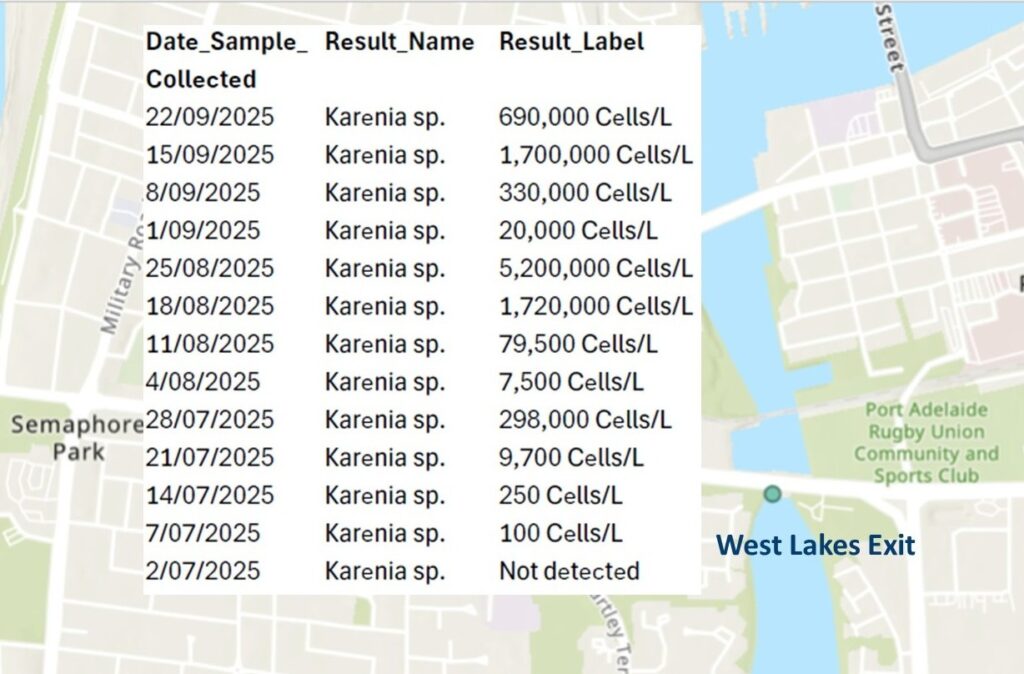
After three months of weekly water samples, the varying levels of the Karenia species in the Port River and Barker Inlet Estuary and from the West Lakes Exit are outlined below.
Most notable amongst the results are
- persistent “very high readings” at the Garden Island and Outer Harbor boat ramps, though the levels detected vary from week to week
- initial lower levels at Port River Dock One in early July, which rose quickly, peaking (so far) on 1st September at 18 million cells/litre and 8th September 2025 at 23 million cells/litre
- a similar surge at the Outer Harbor boat ramp on 1st and 8th September, at levels of 8.7M and 6.9M cells/litre
- low levels of the Karenia species at the West Lakes Exit in early July, followed by persistent high levels in August and September and a peak of 5.2M cellls/litre on August 25th.
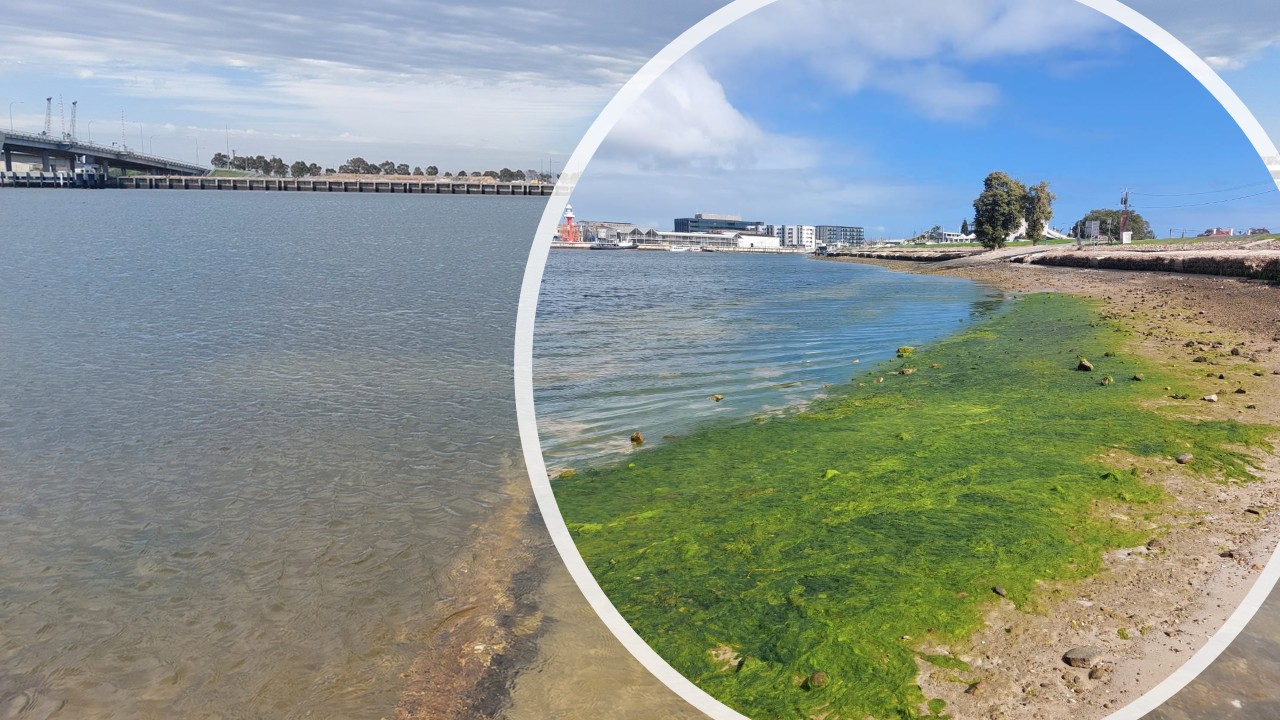
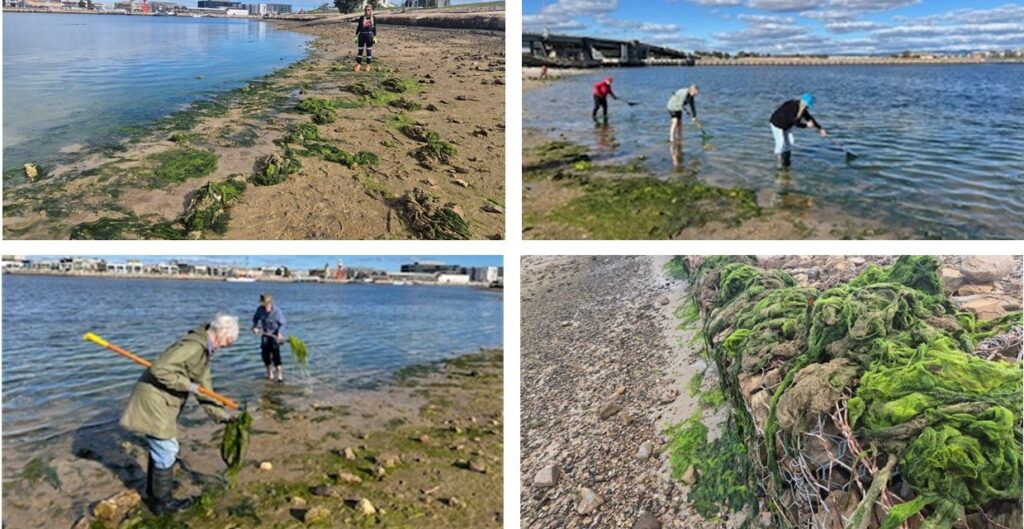
In mid-August Friends of Port River observed masses of sea lettuce on the beach at Cruickshank’s Corner. Peri Coleman advised that the sea lettuce were booming given high levels of Nitrogen and she recommended its removal so that it wouldn’t rot in the River and add to the organic load.
On the 16th, 18th and 23rd August local volunteers joined FPR in removing as much sea lettuce as possible to shore and to date no further masses have been seen at Cruickshank’s Corner.
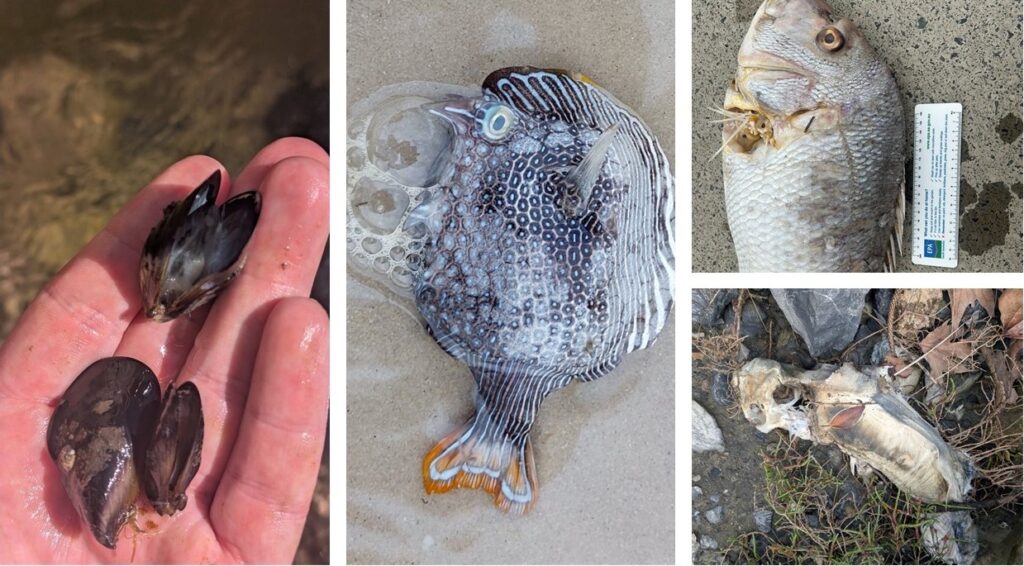
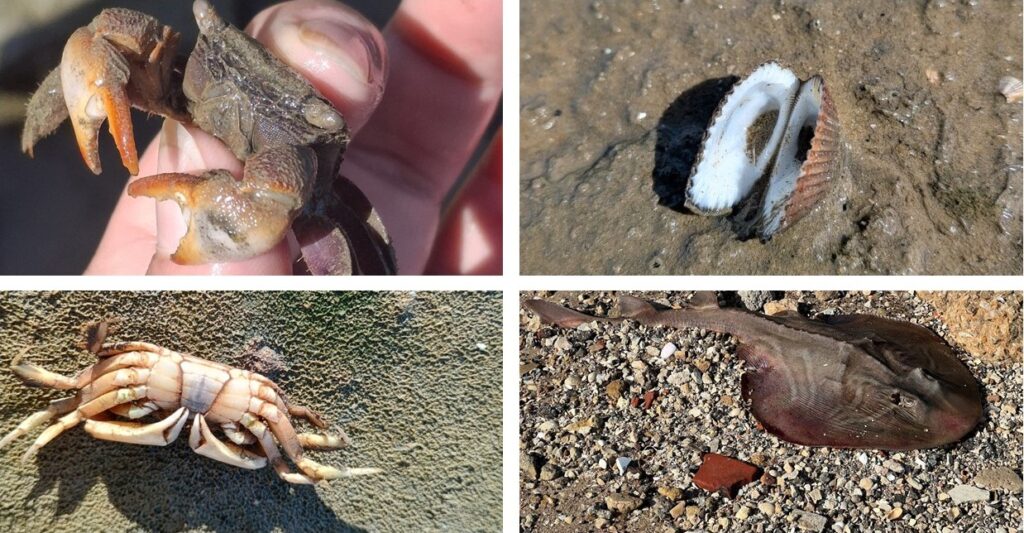
River water has been discoloured (murky) and there’s been some foam, indicating decay. The iNaturalist project SA Marine Mortality Events 2025 is invaluable in sharing records of dead marine creatures across SA during the harmful algal bloom. Records from the Port River and Barker Inlet Estuary include shellfish, crabs, fish as shown below.
One bright note is that it seems that native oysters, which are being restored to the River, are not being affected by HAB, nor is there evidence of the loss of our massive Pacific oyster population which contribute to filtering the River.
There’s lots to still understand about the bloom and its impacts.
The University of Adelaide is seeking more information about the recent loss of seagrass along Torrens Island, and if/how it might be linked to the bloom. There’s concern of course for our local dolphin population, and the food sources which sustain them. And questions as to how birds might be affected e.g. why do there seem to be larger numbers of pelicans near the West Lakes Exit. There’s danger too to dogs and other creatures that eat dead fish. And of course there’s the impact on all of us who love our local coastal and marine environments and want to help however we can. Take care!
Leave a Reply