
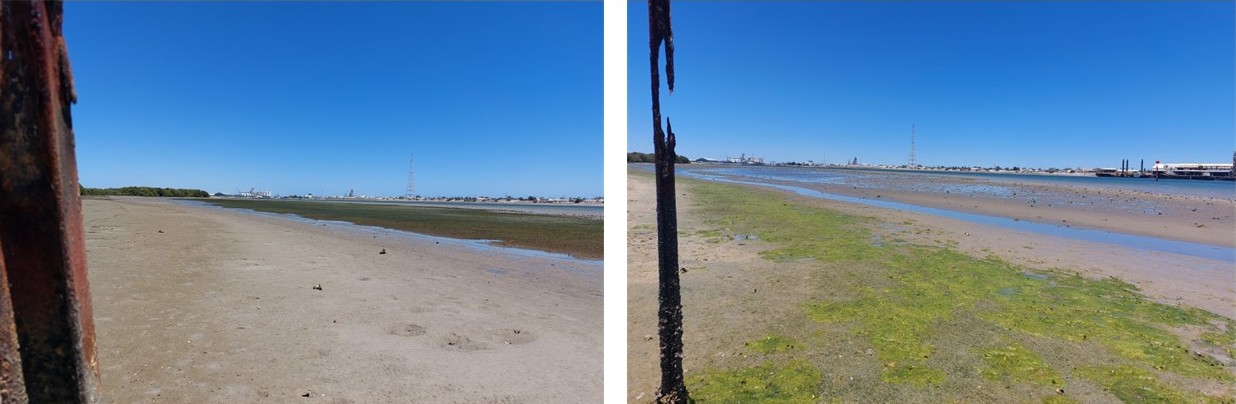
When ECF (FPR’s predecessor) began seagrass monitoring along the western bank of Torrens Island in 2017 we were pleased to see natural recovery of intertidal seagrass (Zostera) south of the Torrens Island jetty. Zostera was monitored and present north of the jetty around 2012.
FPR has designated sites that we’ve continued to visit and photograph at Lipson South, Lipson Central and Lipson North and north and south of the TI jetty. FPR did measure seagrass density, height etc when that was feasible.
Encouraging signs of recovery persisted until February 2023 when a 3 day heatwave, that coincided with very low daytime tides, led to a major dieback of seagrass. There was a further 4 day heatwave in March 2024, with low daytime tides, that again scorched the seagrass. Lipson South, and north and south of the TI jetty, were the most adversely affected sites. In signs of its resilience, seagrass persisted at Lipson Central and there were some small patches of recovery elsewhere in November 2024 and February 2025.
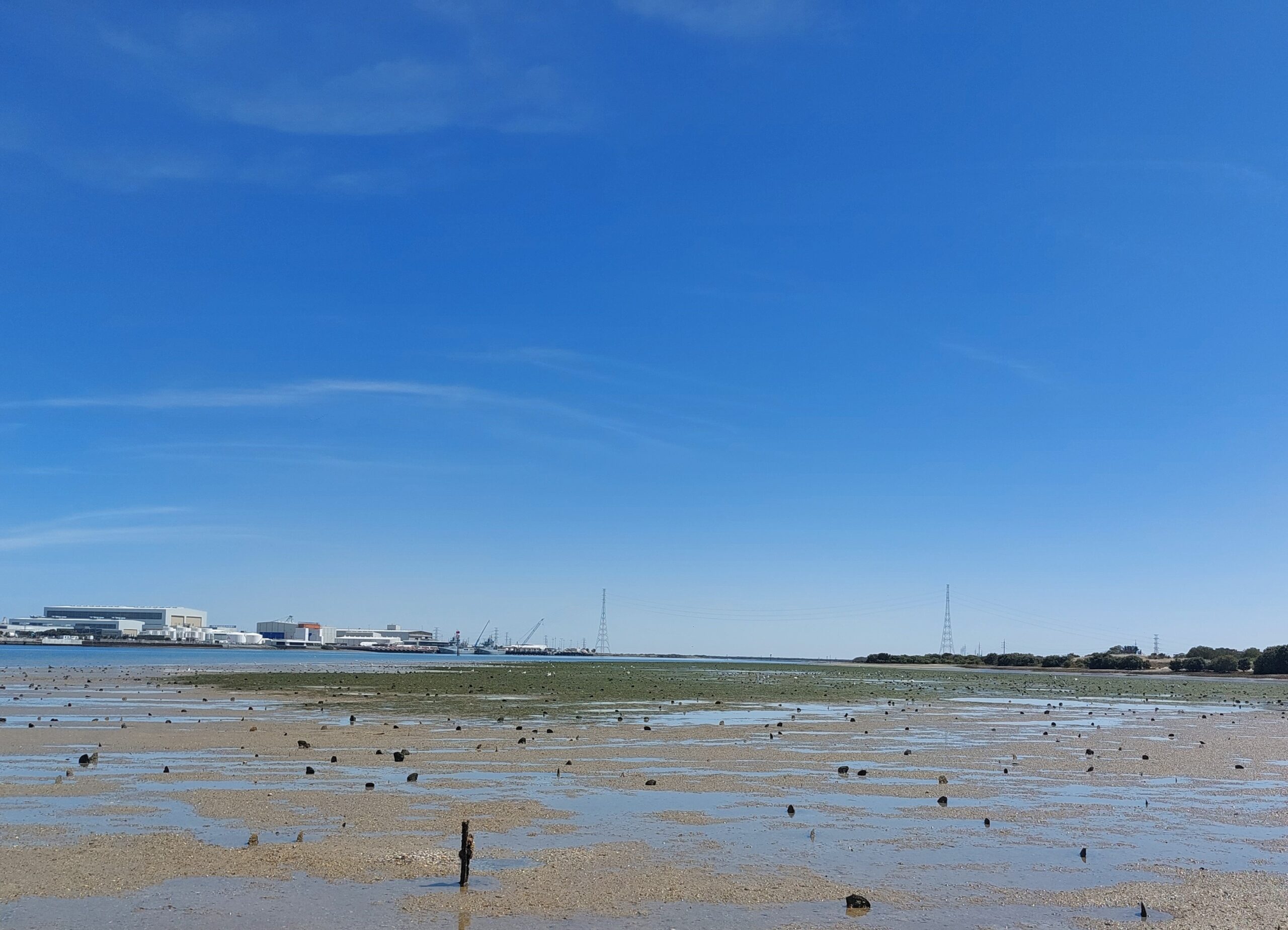
The University of Adelaide has been undertaking a blue carbon study of the Zostera, along the west bank of Torrens Island, and has documented the collapse of the Lipson Central seagrass coinciding with a marine heatwave and the arrival of the Harmful Algal Bloom in the Port River in June/July 2025.
On January 5th 2026, knowing that a further heatwave was due that week, again coinciding with very low daytime tides, FPR volunteers went back to Torrens Island to check for any seagrass recovery. Tiny patches were found that did not look very hardy, there were large bare patches of sand and there was lots of filamentous algae, that’s been present in the River and along our nearby beaches.
Given multiple years of devastating heatwaves, and the loss of carbon documented by the University of Adelaide, FPR are concerned that we protect as much of our subtidal Port River seagrass as possible, and restore our intertidal seagrass if possible.
Leave a Reply