
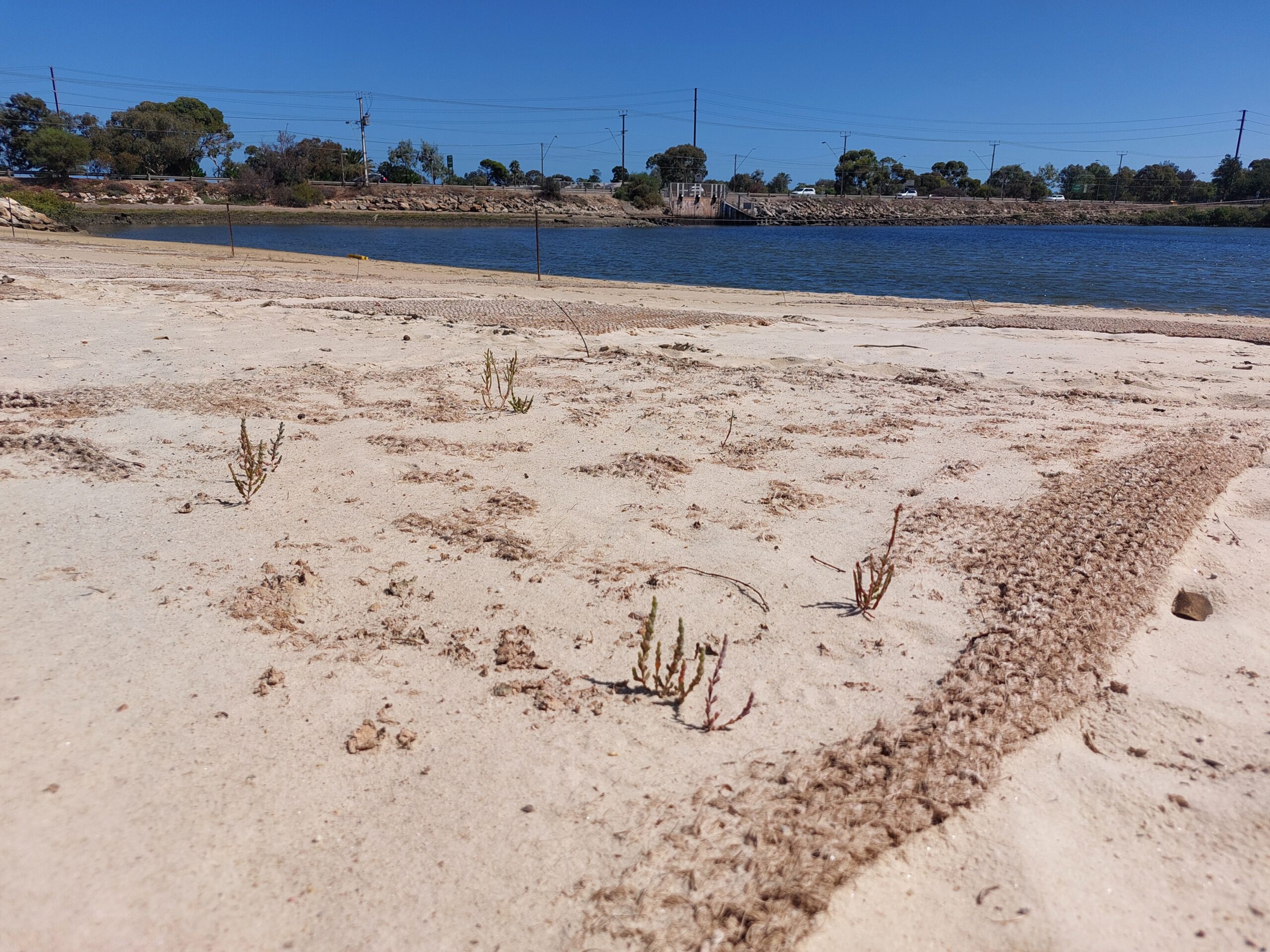
FPR has, since late 2024, assisted at Yitpi Yartapuultiku in establishing and monitoring the Living Shoreline, in collaboration with Council staff, Yitpi Yartapuultiku’s Cultural Ranger Willis Daveson and University of Adelaide student Michelle Holian.
240 mangrove seedlings were transplanted in November 2024 from Mutton Cove to Yitpi Yartapuultiku and through regular monitoring we saw that some were overwhelmed by conical barnacles growing along their stems, some may have been affected by the 2024/25 summer heat and there was some human interference. By the end of the official monitoring period, at end April 2025, there was about 36% survival rate. By December 2025 that had reduced to about 5% with the best survival in the cohorts at the southern end of the beach near the established mangroves.
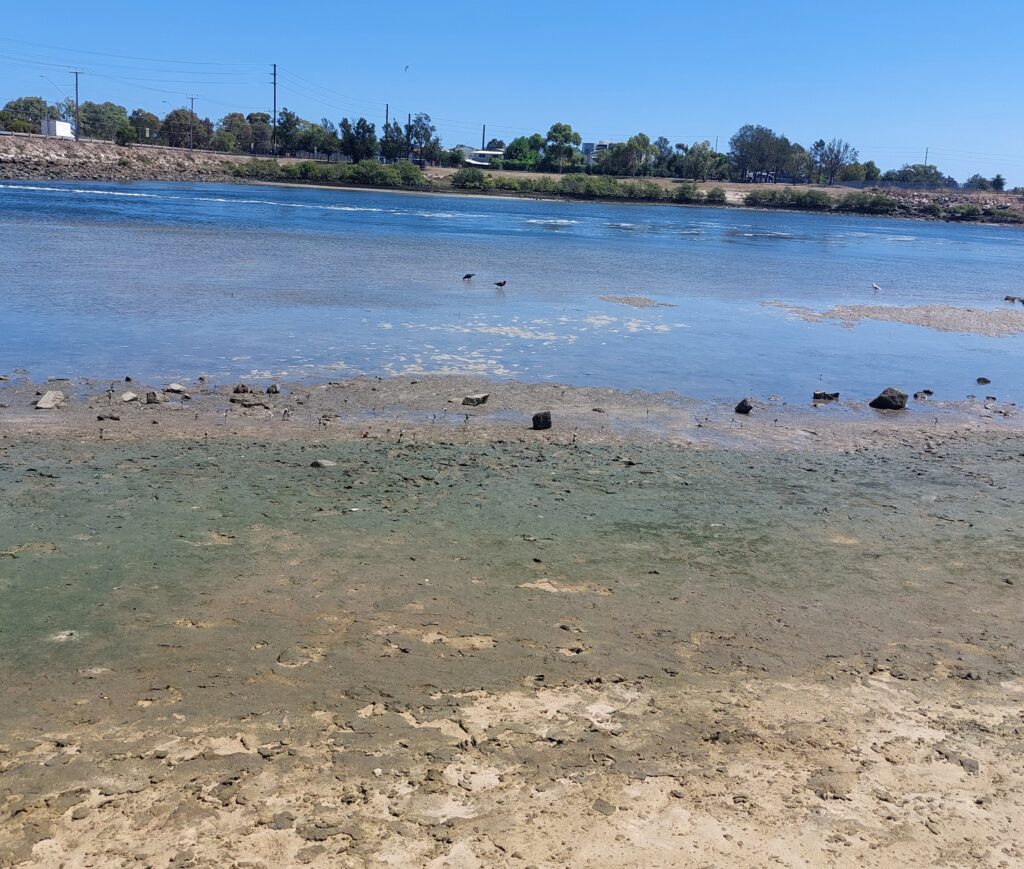
Over summer 2025/26, when very low daytime tides assist intertidal monitoring, it’s been very heartening to see lots of self-seeded mangroves along the Living Shoreline plus mud and healthy algae being deposited along the shoreline bring nutrients to the otherwise ‘dead’ sand (that came from a quarry).
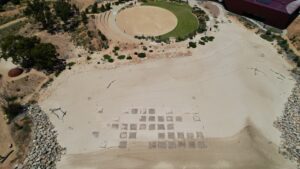
The second large-scale restoration project, to establish the Living Shoreline began on June 26th 2025 when Succession Ecology established an algal mat stabilisation trial. This involved the placement of 60 coir mats (cut in 2mx2m sections), with treatment of some mats and seeding of aquatic seed mix.
A patchwork design of treated coir, untreated coir, and bare sand areas was implemented:
- Treatment 1: Control, bare sand areas (20)
- Treatment 2: Coir mat (20)
- Treatment 3: Coir mat with blue-green algae (20)
Twenty of the mats (treatment 3) were added to an algal mat slurry in tanks to soak, to inoculate the coir with the algal material. Treatment 1 and 2 were used as a control. Aquatic seed mix was ‘broadcast’ across the mats.
Michelle Holian is researching the outcomes of this trial for her PhD, with FPR and Willis Daveson assisting with regular field work.
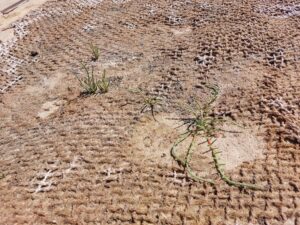
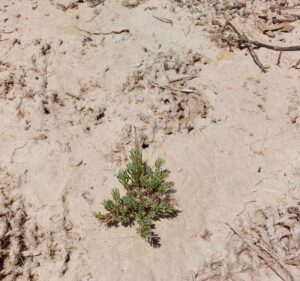
FPR first became aware of plants emerging through the coir mats on October 6th when a participant in one of our Nature Festival events noticed several small plants that appeared to be Beaded Glasswort (Salicornia quinqueflora).
Some of the weather events that might affect the results of the trial include the heatwave from January 6th, that coincided with very low tides, and the tropical storm that brought heavy rainfall (for February) to Adelaide from Feb 28th.
Plants that were doing well before January’s heat seem to have survived and continue to grow, while some of tiny specimens were no longer present when we surveyed on February 4th.
The emerging seedlings are predominantly Salicornia quinqueflora (Beaded Glasswort) with small numbers of Sueda (Seablite) and it’s very apparent that Treatment 3 (coir mat with blue-green algae) is key to their success.
Look for the coir bags with the black cable ties to enjoy the sight of these resilient coastal plants!
Leave a Reply