
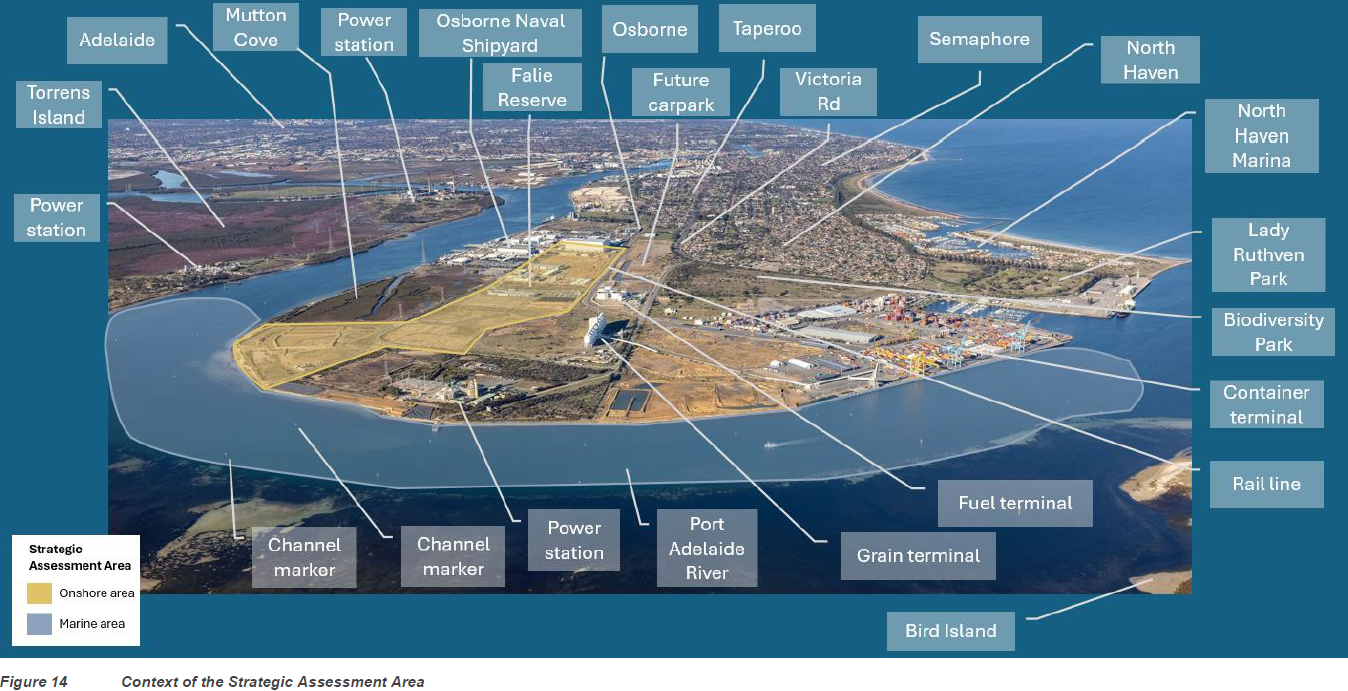
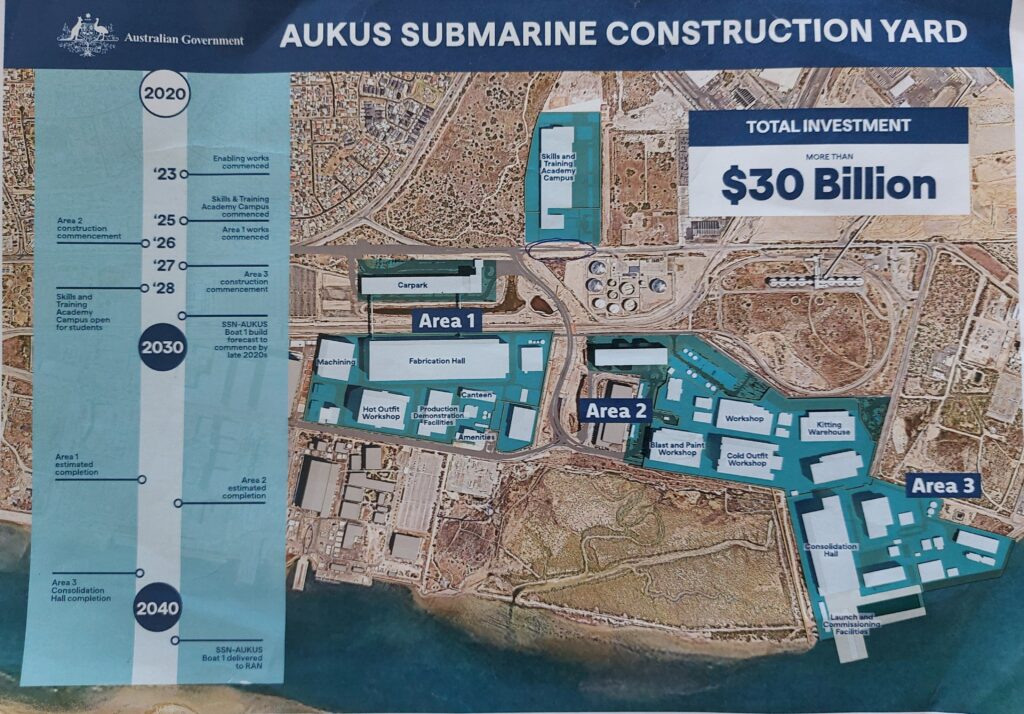
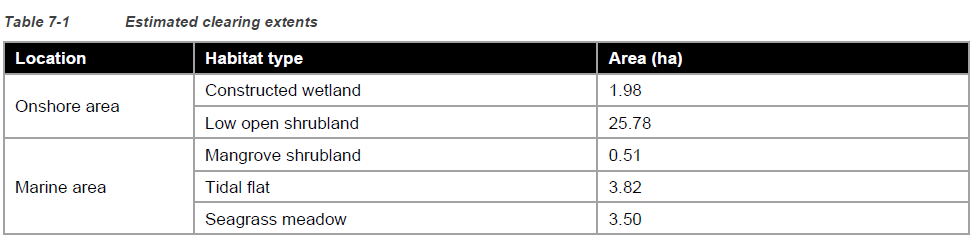
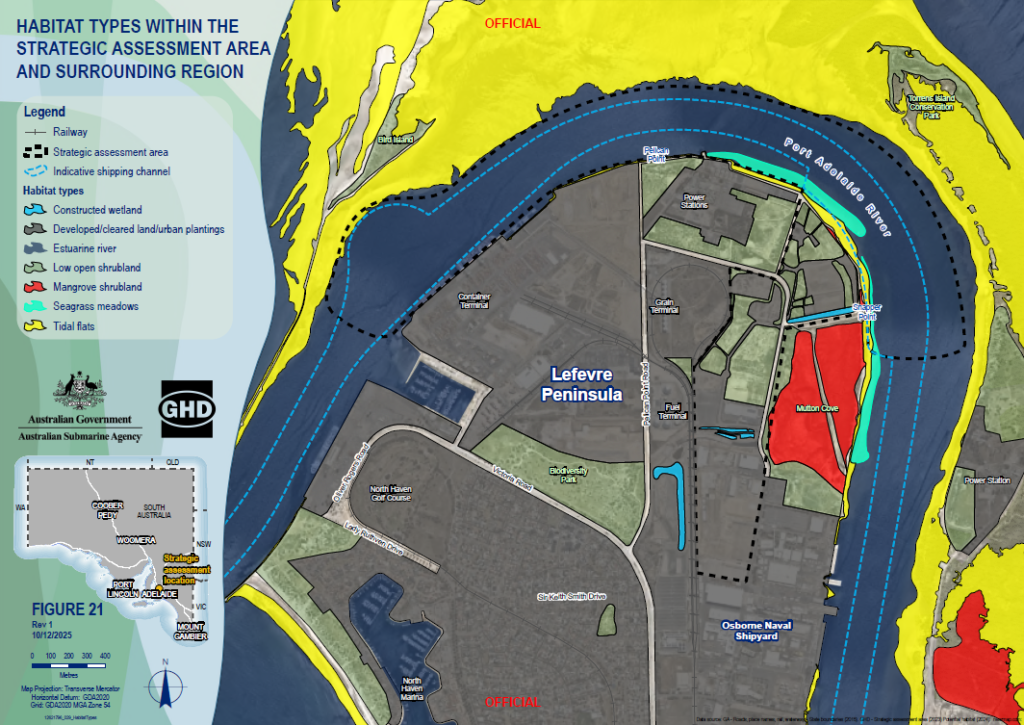
Recent approvals given by the Commonwealth Department of Climate Change, Energy, the Environment & Water (DCEEW) for the Osborne Submarine Construction Yard confirm that the AUKUS development will mean a loss of “approx. 50% of accessible public space within the northern area of the Lefevre Peninsula” and a loss of 3.5 hectares of seagrass. The AUKUS development contributes to the continuing loss of habitat and/or open space on the Peninsula.
(Note: this approval deals with matters covered by the EPBC Act, not the Australian Radiation Protection and Nuclear Safety Act 1998).
While Falie Reserve and Mutton Cove have been important to local residents and the local environment, Falie Reserve has been lost to the Sub Yard (for a bridge to carpark) and Mutton Cove is now surrounded, with public accessibility to be no longer possible from Mersey Road North.
“Of the existing 105 ha of public green space on the northern end of the Lefevre Peninsula, the 52 ha which
comprises Mutton Cove and Falie Reserve would no longer be freely accessible to the public from Mersey Road
North. This is a reduction of approximately 50 percent of accessible public open space within the northern end of
the Lefevre Peninsula.” (Impact Assessment Report pp7-9)
Community aspirations for a biolink from Mutton Cove through Falie Reserve and Biodiversity Park to the North Haven Golf Club and the coast have been dashed by the loss of Falie Reserve and loss of public access to Mutton Cove.
In relation to seagrass loss, the DCEEW report clearly identifies the dredging locations, across approx. 102 hectares with the greatest impacts being on the shoreline from Mutton Cove north, for maritime infrastructure. There could also be environmental impacts from the development of the swing basin for the subs and the deepening of the channel.
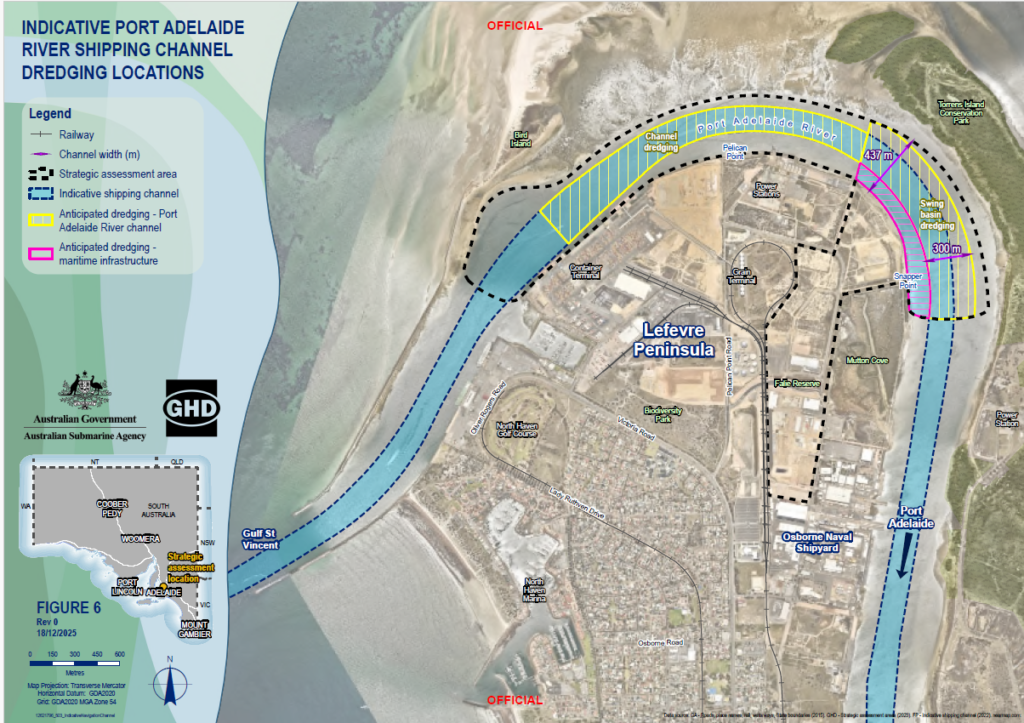
The Report advises “approximately 3.50 ha of seagrass between the onshore area and the existing Port Adelaide River Channel would be removed to establish maritime infrastructure”. The dredging program must also be appropriately managed to prevent degradation of the seagrass meadows from sedimentation and turbidity.
Any further loss of seagrass in that area is regrettable given the extensive losses (approx. 17 hectares) that have occurred from heatwaves, coinciding with very low tides, from Feb 2023.
It is positive that the Commonwealth approval processes (unlike the State) set environmental outcomes that are to be met throughout the life of the Sub Yard. However, Outcome 3 seems weak in that protection of seagrass only applies outside of the ‘dredge footprint’.
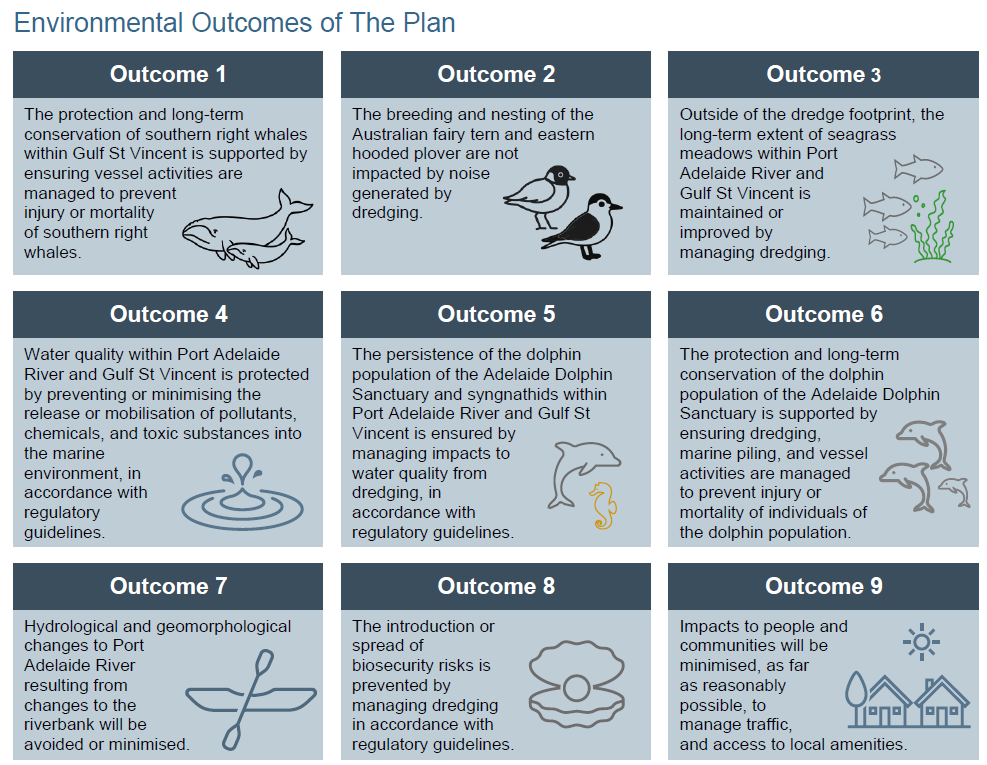
FPR supports the Commonwealth requirements for ASA, within 3 months, to develop an Assurance Plan (as to how the objectives above will be met), for there to be biennial reports to DCEEW and for independent audits to be conducted, and submitted to DCEEW every six years. Importantly the Assurance Plan, biennial reports and independent audits are to be made publicly available.
Leave a Reply